Le Corbusier is a Legendary Architect. He is the trendsetter of the Modern Architecture. He designed various different types of structures where he has proved his uniqueness in design.
Map Of Chandigarh City
He designed residences, offices, villas, structures such as Parliament building, high courts etc. Each of his designs are very much different from one another. Every building of his talks about his unique character and the purpose it is made for. Even today, his designs are considered modern and Legendary.
In 1950, India’s Prime Minister Jawharlal Nehru invited Le Corbusier to India to design a city, Chandigarh.
Let us now move on with a brief discussion on Roman Architecture, Early Christian Architecture and Byzantine Architecture…
Roman Architecture (300BC to 365AD) (Preceded by Etruscans)
Certain aspects in Roman Architecture were influenced by the Greek Architectural style. Romans did take a few aspects from Greek Architecture but invented a totally different architectural styles.
Etruscans were preceded by Romans. Romans were indebted to the Etruscans for supplying them with knowledge on Structural systems. Etruscans had immense knowledge of Hydraulics and construction of arches.
Later on, with the development of newer and better materials, Roman Architecture took a new form.
The population of Rome was increasing which forced the designers of Rome to figure out new architectural solutions to cope with the growing problem. They constructed vaults and arches and had sound knowledge of building materials which helped them achieve great success in the construction of huge structures for general public use.
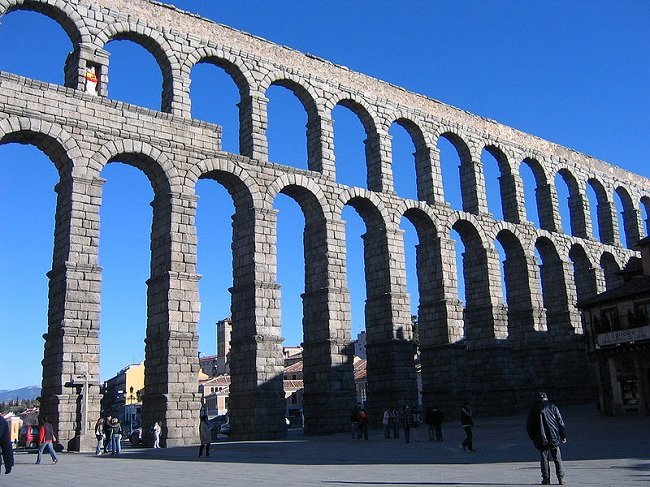
Roman Aqueducts are a very popular example of Roman engineering marvel. There were eleven aqueducts in the Rome itself. They were built over a period of 500 years. This is how the saying “Rome was not built in a day” is internationally popular.
Segovia Aqueduct, Rome
Aqueduct of Segovia is one of the most significant and best preserved ancient monuments.
The principle of Unity deals with visual composition in design. Composition means the relationship between the visual elements. The brick work, timber and concrete which we use as building materials for protection from weather or for structural support form the visual composition of architectural composition. To get a good composition, the elements of unity should be chosen carefully.
Unity therefore deals with the arrangement of building materials and building parts (floor, wall, roof, column, beam, etc) to create a good composition.
7 key Elements of Unity
Texture
Colour
Tone
Direction
Proportion
Solid and Void
Form and Shape
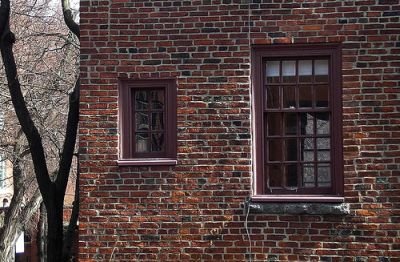
Consider materials such as stone, glass and steel. They are available in a variety of colours, tones, textures, shapes, proportions, etc. Various compositions of these material properties are possible-the challenge lies in arising at the most pleasing composition. The texture or colour of a single brick or wood panel will differ in effect when it forms a part of the larger composition such as brick wall or a door frame set in a wall.
Architecture is a design process which involves certain design principles that are to be followed. It is a lengthy design process which involves planning, designing, creating, erecting, constructing and executing construction of various types of buildings that are functionally efficient, economically viable and aesthetically pleasing.
Proportions and Aesthetics
Aesthetics form the core of any Architectural Design. Any building which is functional but lacks aesthetic appeal is not counted under the categories such as Great Design Concept. It is just a building like any other building.
The two most important factors in the design of a building are Form and Function. Apart from creating beautiful forms, an Architect must keep in mind that Form that enhances the external aesthetic appeal should also relate to the functionality of the interior environment.