Raj Rewal | Revolutionary Architect of India

Legendary Architect of India – Raj Rewal

Raj Rewal was born in 1934 in Hoshiarpur, Punjab, India. He created a revolution in geometric design systems. Creation of geometric systems and responding visual imageries are apparent in Raj Rewal’s architectural works.
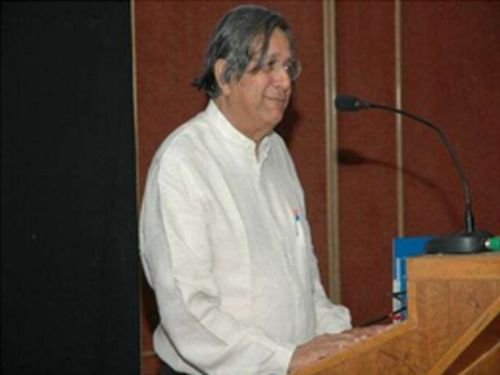
Raj Rewal - Indian Architect

Education of Raj Rewal

He lived in Delhi and Shimla for a couple of years in his childhood that is from 1939 – 1951. He attended Harcourt Butler higher secondary school. In 1951-1954, he attended Delhi School of Architecture in New Delhi.

He was very imaginative and a creative person. His imaginative perception helped him go a long way. He believed in gaining knowledge and then applied his knowledge mingled with creativity in his projects.

After completing the post graduation in Architecture; in 1955-1961, he moved to London and attended the architectural association of architecture for one year. He completed his formal professional training at the Brixton school of building, London.

Raj Rewal took up his first job as an assistant stage manager for several avante grade theatre production in London. He became an associate of the Royal Institute of British Architects, London.
Read more

The Evolution of European Gothic Architecture

Gothic architecture is a style of architecture which flourished during the high and late medieval period.

Originating in 12th-century France and lasting into the 16th century, Gothic architecture was known during the period as “the French Style”, with the term Gothic first appearing during the latter part of the as a Renaissance stylistic insult.

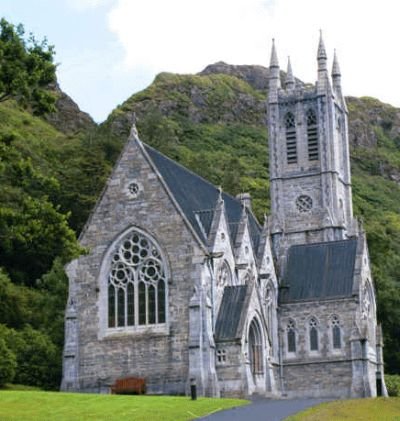
Kylemore Gothic Church

It evolved from Romanesque Architecture and was succeeded by Renaissance Architecture. The Goths contributed many architectural ideas. Those ideas have been used in various structures in the Gothic Period most importantly in the construction of Cathedrals. Renaissance Architecture which flourished after the Gothic Architecture adopted some of its ideas but modified it according to their architectural sense of understanding.

The elements that developed during  the Gothic Period are as follows:

  1. Pointed Arch
  2. Fan-like Vault
  3. Flying Buttress

Read more

Role of Teachers in Architectural Education

The Teacher’s Role in Architectural Education

This is the most important article I have ever written. This article is not just for architecture students but also for Professors in Architecture Colleges and Universities and Architects.

The falling standards of mass education is a contagion that has engulfed Architectural Education in the state. The poor quality of work and professionalism needs no mention. Sometimes this deterioration in quality is accredited to the quality of students but I find this excuse inacceptable because, out of the many responsibilities and duties, one of the essential element in imparting Architectural education is the process of simplification. The teacher has to simplify matters enough for a common man to understand. In a profession which depends upon visual effects it becomes all the more important to simplify verbal and written matter into graphic displays easy enough for the laity.


Fallingwater by Frank Lloyd Wright | Inspiration for students of Architecture

Architecture is not for Architects; it is for people, and whatever the Architects may think; whatever theories they may have, it is through the senses that people appreciate and it is through the development of these senses that the Architect designs. It is through the senses we feel Architecture.

One does not satisfy ones feeling by expressing one’s own feelings. What is required of Architect is the intellectual process based upon “sympathy”. He must contrive to give people what they will enjoy, not what he would wish them to enjoy. This sympathetic approach is particularly relevant to India where the masses distinguished by their diverse cultural traditional require the Architects ti provide design solution based on indegeneity. This sympathetic habit has to be inculcated among the students by a teacher who himself/herself understands the meaning of sympathy. Students need to be reminded and constantly guided about this kind of an approach to Architecture which would serve the unique requirements of unique people.

From this view point – mass housing is like an anti-biotic for all ailments. Individuality and diversity is lost under the debris of a secular culture and Architecture. The importance of visual and audial effects upon the space must be emphasized.

Read more

Mud Architecture | Low Energy Intensive Technique

Mud Architecture

Mud Architecture is basically studying mud as a building material which has already being tested and tried for thousands of years. The property of this material is very different from the ones which are in used in modern day construction hence the method of using it is very different.

Mud Architecture
Mud Architecture

Like all materials this is also has its own limitations which can be overcome but the main advantage is we do not need lot of energy to manufacture it unlike brick, cement, steel, concrete, etc. Hence today when construction is consuming such a large amount of energy, which needs to be conserved it has become a necessity than a demand to sensibly explore into this alternative material for construction which I have discussed further in my article.

Read more